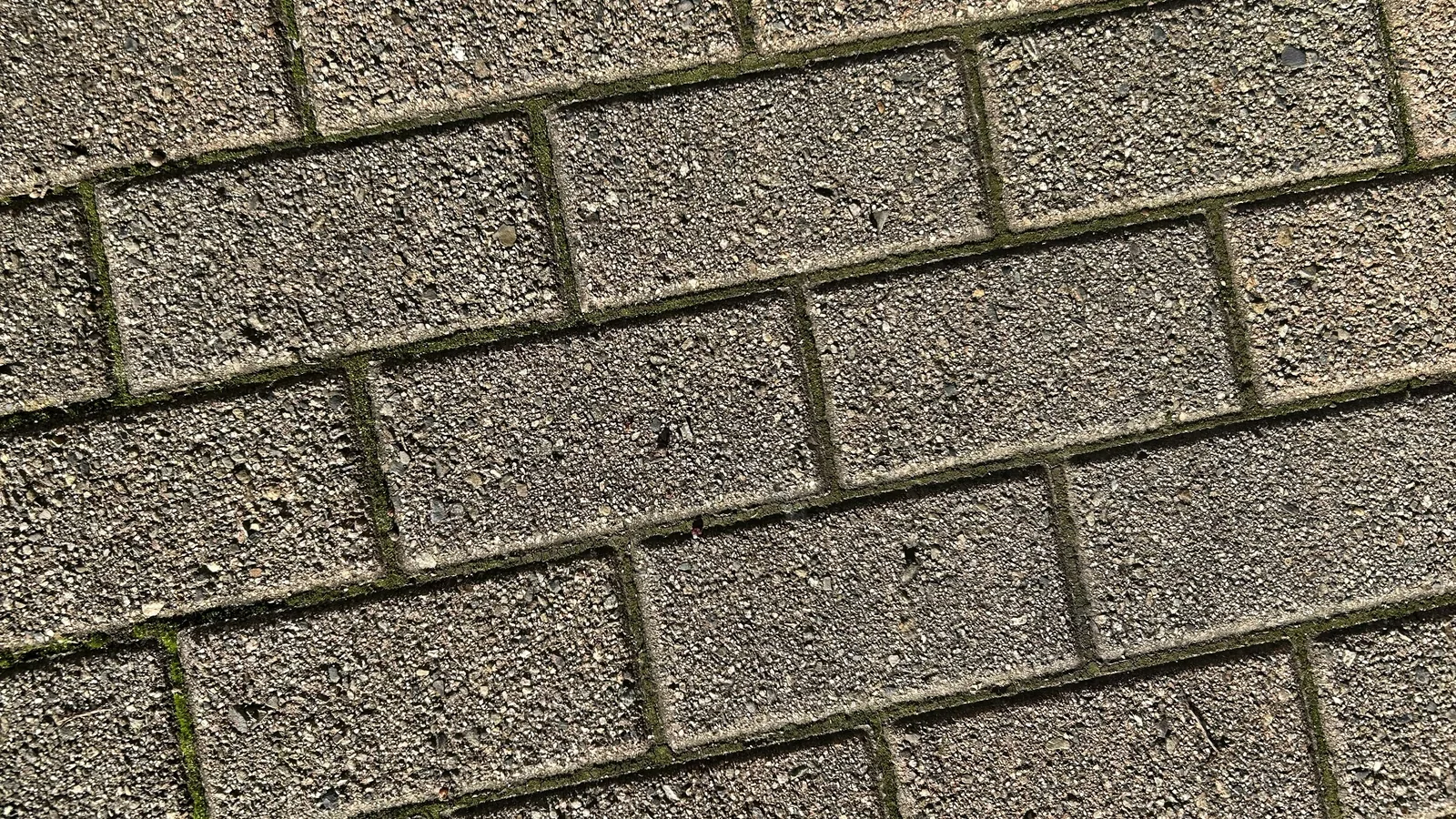
If your driveway looked bright white the year it was poured and now it's gray, green or streaked with black, you're not imagining it. Concrete is porous, and Florida's heat, humidity and afternoon rain make it an ideal home for things that grow.
Most of the dark color is mildew and algae. They thrive in shaded areas, along the edges where sprinklers hit, and anywhere water sits after a storm. Add red clay tracked in from the yard, rust stains from well water and sprinklers, and tire marks, and a driveway can look years older than the house.
Besides looking bad, the growth can make walkways slippery when wet, which matters on sidewalks, pool decks and entry paths.
Pressure washing with a surface cleaner is the most effective fix. The rotating cleaner covers concrete in even passes, so you get a uniform finish instead of the stripes and wand marks that come from spraying by hand. Plants, screens and painted surfaces nearby need protecting, and the whole area gets a thorough rinse at the end.
In our climate, most driveways and sidewalks benefit from a cleaning once a year, and more often in heavily shaded spots. It's also one of the best-value projects before listing or renting a home — the change is immediate.
JP&K Green Solutions LLC cleans driveways, sidewalks, walkways and patios across Avon Park, Sebring, Lake Placid, Frostproof and Lake Wales. Call (863) 991-2140 for a free estimate.